
Creating the next era of healthcare advancements for patients
-
At Johnson & Johnson, we are leading where medicine is goingJ&J is advancing the next era of medical innovation through our continuous R&D investments, totaling $77.7 billion since 2016.1 However, patients’ cost exposure and access challenges are increasing because of distorted insurance benefit design and regulatory hurdles. -
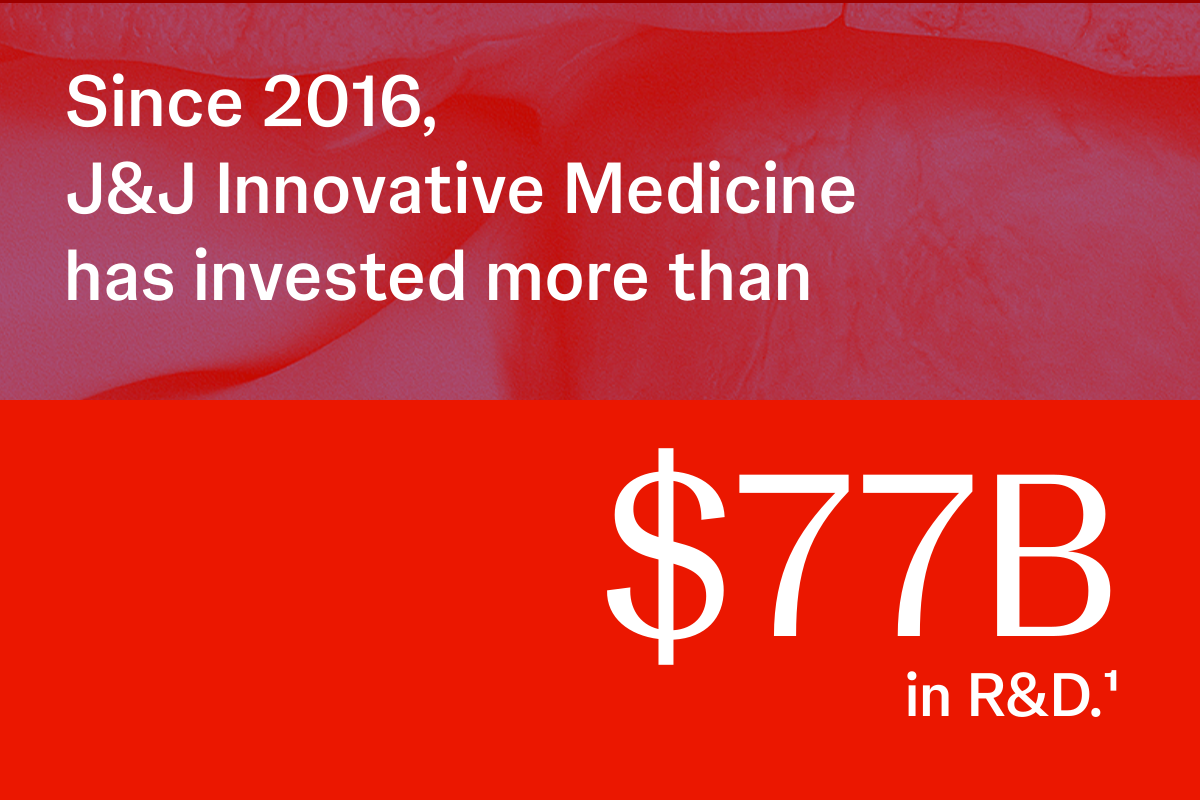
J&J’s R&D investments: Making the hope of innovation a reality for patients in the next decade…and beyond
But patients still face significant barriers to access
Pharmacy benefit managers (PBMs) create barriers to access by implementing restrictive programs like prior authorization, step therapy and formulary exclusions, which hinder provider and patient healthcare decision-making.4 Additionally, distortions in health insurance benefit design and underinsurance leave many patients financially exposed and unable to afford necessary treatments, disproportionately impacting vulnerable populations.3
Our responsibility to patients
-
At J&J, we understand our dual responsibility to patients: (1) to develop the next generation of medicines across a vast continuum of diseases for the patients of tomorrow and (2) to help support affordable access to our medicines.
To meet these responsibilities we have to patients, the healthcare system and society, we consider three factors when pricing our medicines: -
- The value they bring to patients, the healthcare system and society
- The need to further support patient access
- The need to continue innovating and developing new and novel medicines for the patients of today and tomorrow
-
-
Drug list prices are simply a starting point
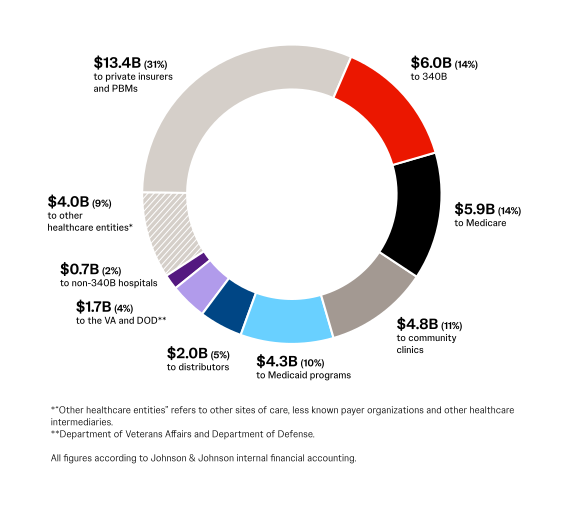
Manufacturers like Johnson & Johnson support patients’ access to their medicines through vigorous private market negotiations with health insurance companies, PBMs and other intermediaries that dispense medications (e.g. hospitals and clinics).
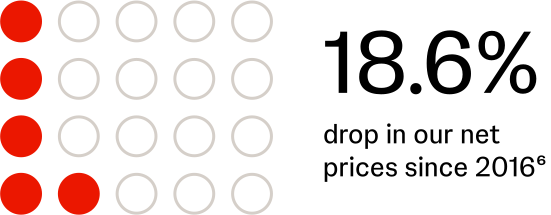
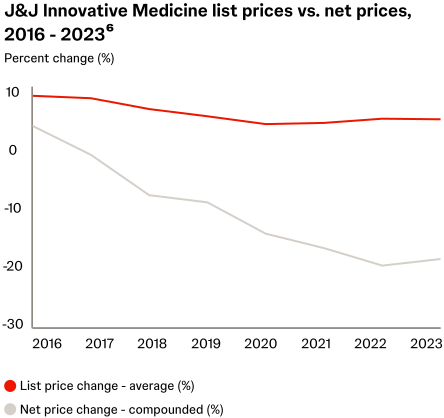
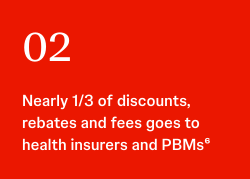
Our net prices have declined by nearly 20% over the past seven years.6 Despite lower net prices paid by insurers for our medicines, millions of patients are still facing higher costs and barriers to access and some are even having patient assistance taken from them.
-
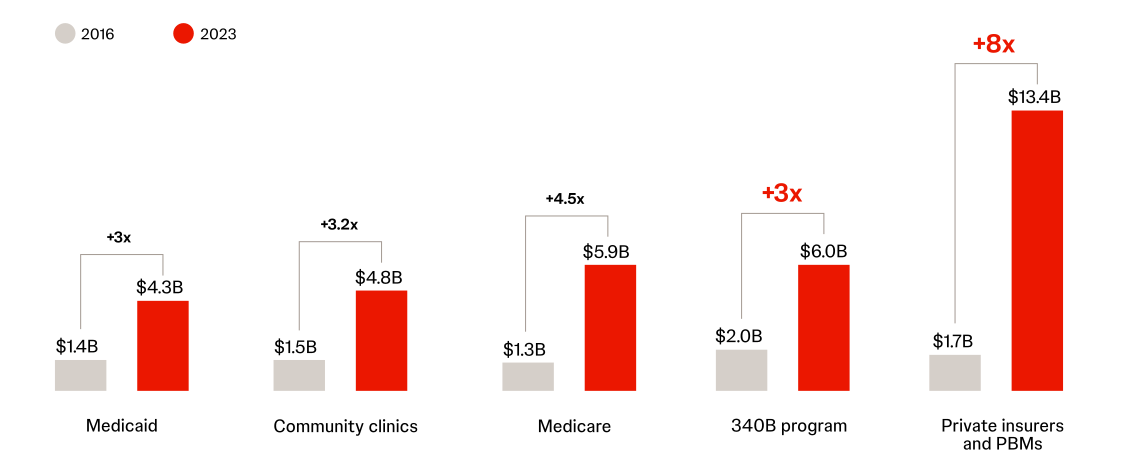
Our rebates, discounts and fees have risen significantly from 2016 to 20236
-
-
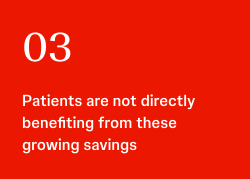
Patients are not directly benefiting from lower net prices
We negotiate lower net prices to expand access and to make drugs more affordable for patients, not to benefit middlemen and other intermediaries.
The gap between U.S. list prices, which is what we charge insurance companies, and net prices for brand name medicines, which is after rebates and discounts provided to private insurers and other intermediaries, grew by 45% from 2017 to 2022.7 -
Supporting affordable access: Three ways to lower patient costs
The real impact of rising out-of-pocket costs
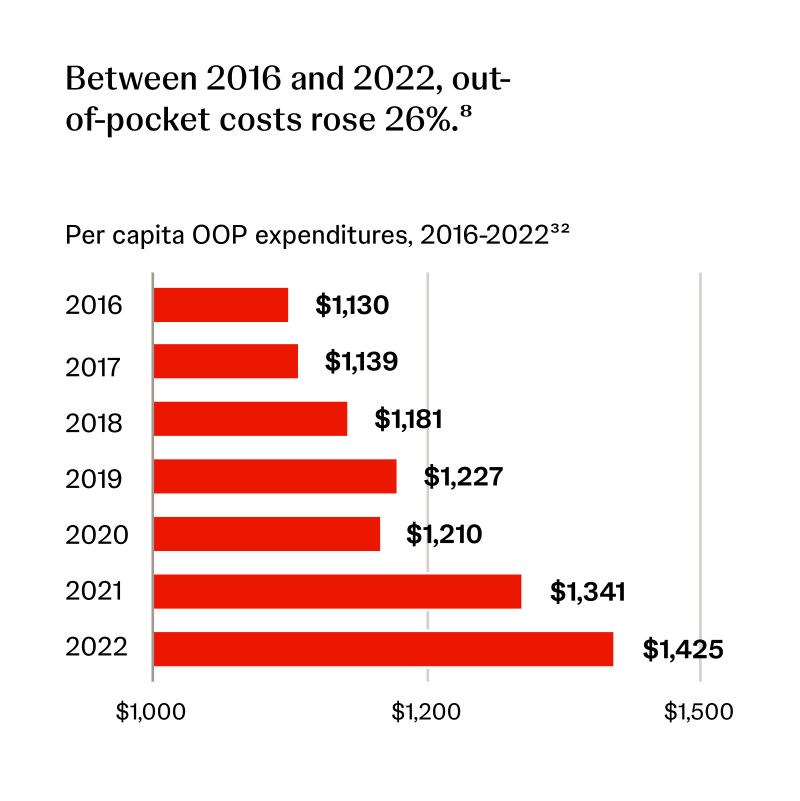
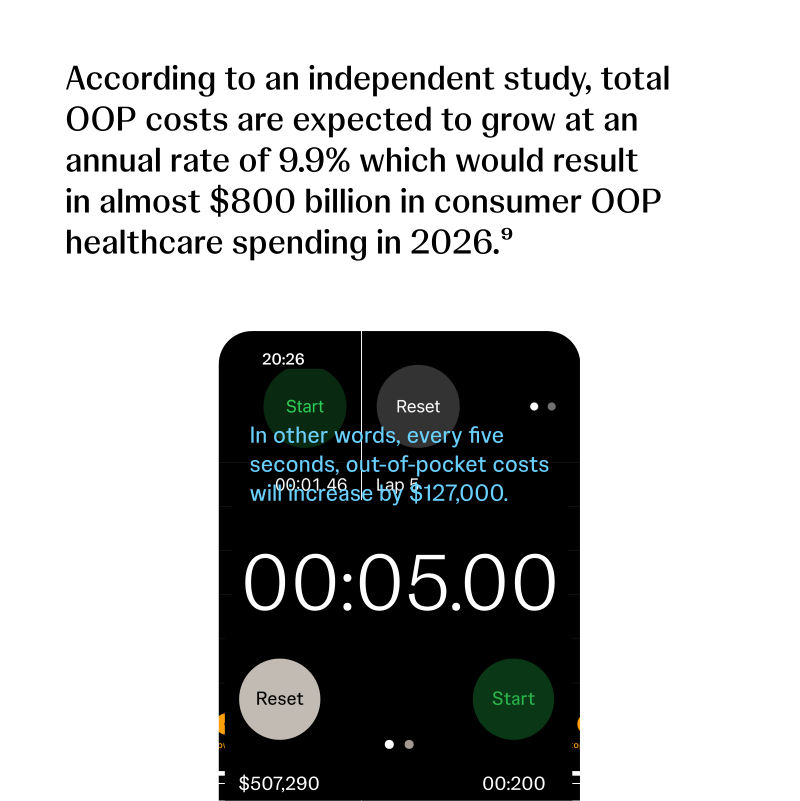
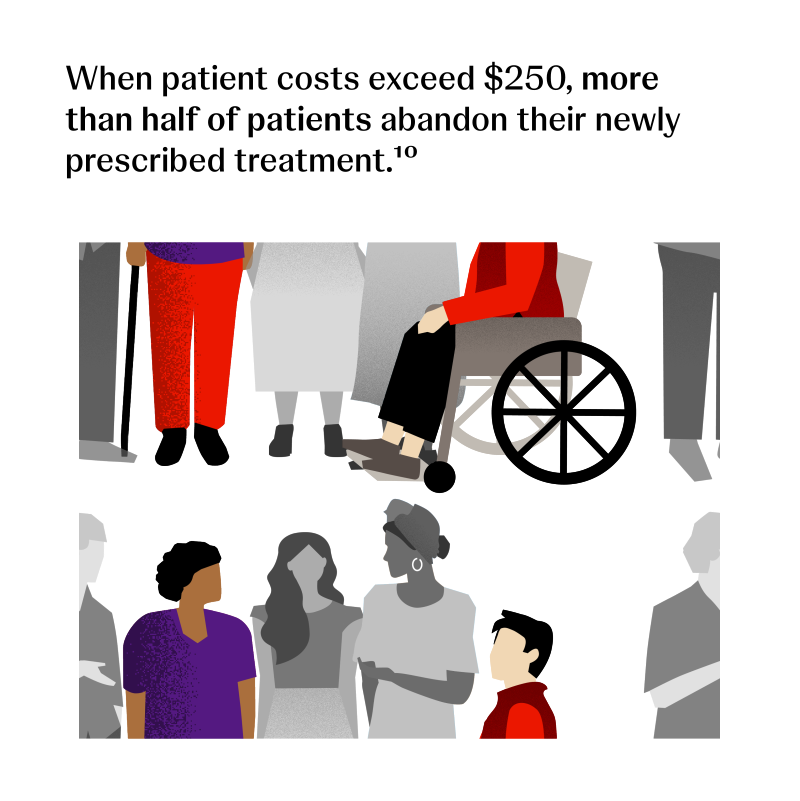
The summary

Policy challenges to the innovation ecosystem
Stop government price-setting
At the federal level, concerns are mounting that government-mandated prices could upend the process of drug discovery and development or tie U.S. drug prices to those in foreign countries. At the state level, Prescription Drug Affordability Boards (PDABs) and Upper Payment Limits (UPLs) on branded medications have gained momentum — but these policies have significant drawbacks.
Preserve the value of innovation
Policy changes that would limit the ability to protect inventions or enforce patent rights associated with pharmaceutical innovation would upend the R&D innovation ecosystem that advances treatments for patients today, as well as pharmaceutical innovations for years to come.
- Intellectual property rights: Limiting the ability to protect inventions or enforce patent rights associated with pharmaceutical innovation would upend the R&D innovation ecosystem that advances treatments for patients today, as well as pharmaceutical innovations for years to come.
- “Marching in”: The 1980 Bayh-Dole Act was passed to promote the use of inventions and spur collaboration between government funded entities and innovative companies with the expertise and capabilities necessary to develop and commercialize innovative products.11 It was never intended to be used as a price setting mechanism, nor as a tool to seize intellectual property rights based on a government dictated “reasonable” price. If the government “marches in” and licenses patent rights to widely available treatments, public-private sector collaboration and the innovation ecosystem will suffer.12
Keep decisions up to patients & providers
Misaligned incentives in the market and in programs like 340B have strengthened middlemen like PBMs, whose growing use of restrictions and opaque operating models are creating significant hurdles for providers and patients to make the right healthcare decisions. Policies should protect the patient-physician relationship and eliminate the undue influence of commercial payers on patient health decisions.
-
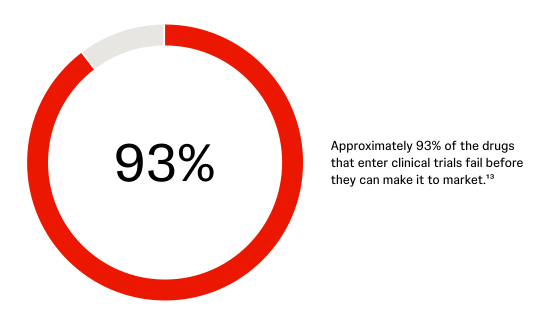
R&D: A process of inherent risk
The innovation ecosystem also needs policies and regulations that bolster scientific advancement. Discovering and developing life-saving medicines requires significant resources and cooperation between researchers and regulators.
On average, it takes more than 12 years and $4 billion, including cost of capital for the total lifecycle, to bring a new medicine to market.14, 15 -
-
-
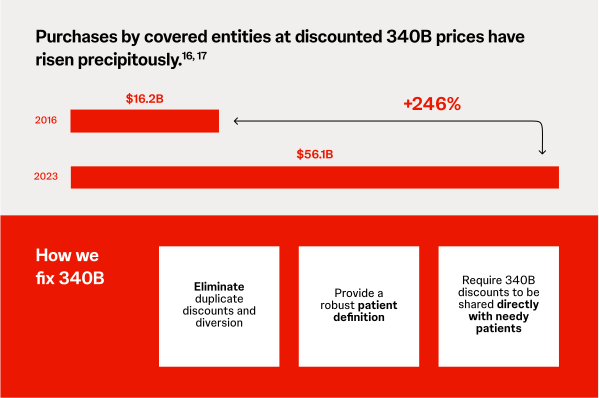
The 340B Program: Diversion and duplicate discounts are hurting vulnerable patients
The 340B Program was designed by Congress to be a very limited, targeted program enabling manufacturers to restore deep discounts that manufacturers historically had provided voluntarily to safety net providers. However, the program has grown out of control as for-profit pharmacy chains and larger health systems have used it to boost profits without directly benefiting patients.
Read our 340B brief to learn more about the growing problems with the 340B Program — and how to fix them.
Making healthcare policy work for patients
-
 Reform PBMs to prevent patient access hurdles, lower patient costs and promote patient-provider decision making
 -
 Reform the 340B Program to support its original intent, building increased transparency and accountability
 -
 Stop patient assistance diversion programs and prevent the spread of alternative funding programs (AFPs)
 -
 Enact policies that preserve the innovation ecosystem that enables the discovery and development of cures
-
Looking back at the Orphan Drug Act: What better policy can deliver for patients
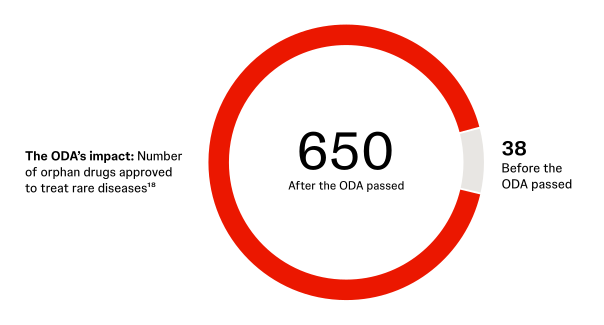
To encourage manufacturers to address unmet patient needs for orphan drugs, which treat rare diseases, in 1983 the federal government passed the Orphan Drug Act (ODA). Under the ODA, a company may qualify for research grants, tax credits for qualified clinical trials and potential seven-year market exclusivity after a drug’s approval.19
The result: Before the ODA was passed, the FDA had approved just 38 orphan drugs to treat rare diseases. Today, more than 650 orphan drugs have been approved by the FDA — with more in development.18 -
-
-
Valuing pharmaceuticals in the U.S.
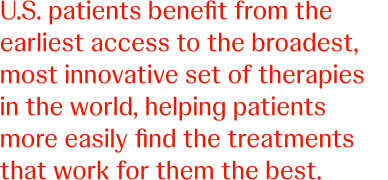
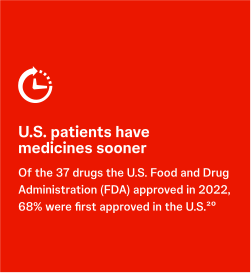
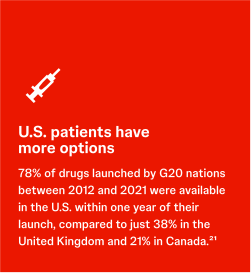
When the U.S. innovation ecosystem works as intended, supported by policies that promote innovation, it leads to more effective and personalized treatments that are available faster, earlier intervention and smarter, less invasive healthcare for patients today and in the future.
What value looks like for patients
Patients’ needs should determine value
Patient-centered
A patient-centered approach is fundamental to achieve the most efficient use of medicines, not waste resources and ensure that access to treatments is nondiscriminatory. This approach respects patient autonomy by placing every patient’s outcome at the forefront of decision-making.
Decentralized and locally relevant
Valuations must consider the specific needs of local health systems. Treatment needs in rural areas or underserved communities, for instance, may differ significantly from treatment needs in metropolitan areas or communities that are adequately resourced.
Deliberative and flexible
Valuations should be done in a deliberative way and not use strict decision rules or oversimplified metrics, like the discriminatory quality-adjusted life year (QALY), expected value of life years gained (evLYG) or healthy years in total (HYT). Instead, the full diversity of healthcare values must be considered, prioritizing those of patients.
Holistic
Valuations must not rely on information from a small set of simple summary statistics, such as average life expectancy and average cost, but instead consider the full range of impacts to the patient, healthcare system and society. Valuations that are incomplete will distort the marketplace, resulting in both today’s and tomorrow’s patients receiving suboptimal care.
Clinically driven
Clinically driven valuations best preserve the opportunity to maximize the health of every patient and should prioritize their health and safety. Financing of medicines should be considered separately and addressed through insurance solutions.

Citations
Introduction
1. Figure according to Johnson & Johnson internal financial accounting. Values may have been rounded.
2. Johnson & Johnson. “J&J Innovative Medicine Business Overview.” Slide 6. December 2023. https://jnjbusinessreview.q4ir.com/files/doc_downloads/2023/12/innovative-medicine-presentation.pdf. Accessed May 2024.
3. Sara R. Collins, Lauren A. Haynes, and Relebohile Masitha. “The State of U.S. Health Insurance in 2022.” Commonwealth Fund Biennial Health Insurance Survey, The Commonwealth Fund. September 29, 2022.https://www.commonwealthfund.org/publications/issue-briefs/2022/sep/state-us-health-insurance-2022-biennial-survey.Accessed May 2024.
4. PhRMA. “Insurers and Middlemen Force Many of the Sickest Patients to Face High Out-of-Pocket Costs.” https://phrma.org/resource-center/Insurance-Coverage/Insurance-Coverage-and-PBMs.Accessed May 2024.
5. Robbins R, Abelson R. “The Opaque Industry Secretly Inflating Prices for Prescription Drugs.” The New York Times. https://www.nytimes.com/2024/06/21/business/prescription-drug-costs-pbm.html.Published June 21, 2024. Accessed July 2024.
Our responsibility to patients
6. Figure according to Johnson & Johnson internal financial accounting. Values may have been rounded.
7. Adam Fein, “Gross-to-Net Bubble Update: 2022 Pricing Realities at 10 Top Drugmakers.” Drug Channels. June 2023. https://www.drugchannels.net/2023/06/gross-to-net-bubble-update-2022-pricing.html. Accessed July 2024.
8. Peterson-KFF Health System Tracker. “How has U.S. spending on healthcare changed over time?” December 15, 2023. https://www.healthsystemtracker.org/chart-collection/u-s-spending-healthcare-changed-time/#Average%20annual%20expenditures%20growth%20rate%20for%20select%20service%20types,%201970-2022. Accessed May 2024.
9. Kalorama Information. “Out-of-Pocket Healthcare Expenditures in the United States, 5th Edition.” August 2, 2021. https://kaloramainformation.com/product/out-of-pocket-healthcare-expenditures-in-the-united-states-5th-edition/. Accessed May 2024.
10. IQVIA. “The Use of Medicines in the U.S. 2023, Usage and Spending Trends and Outlook to 2027.” May 2, 2023. https://www.iqvia.com/insights/the-iqvia-institute/reports-and-publications/reports/the-use-of-medicines-in-the-us-2023. Accessed January 2024.
Policy challenges to the innovation ecosystem
11. PhRMA. “The Role of The Bayh-Dole Act in Fostering Technology Transfer And Implications for Innovation.” February 2020. https://www.phrma.org/-/media/Project/PhRMA/PhRMA-Org/PhRMA-Org/PDF/A-C/Bayh-Dole-Whitepaper-FINAL---21820.pdf. Accessed January 2024.
12. PhRMA. “Proposed march-in framework would chill American innovation.” February 7, 2024. https://phrma.org/Blog/Proposed-march-in-draft-framework-would-chill-American-innovation. Accessed May 2024.
13. Dowden H, Munro J. “Trends in clinical success rates and therapeutic focus.” July 16, 2019. https://www.nature.com/articles/d41573-019-00074-z.epdf?no_publisher_access=1&r3_referer=nature. Accessed May 2024.
14. Neumann U, Proudman D, Martin S, and Grabowski HG. “Public Sector Replacement of Privately Funded Pharmaceutical R&D: Cost and Efficiency Considerations.” May 5–8, 2024. https://www.ispor.org/docs/default-source/intl2024/j-j-access-policy-research---ispor-2024---government-and-industry-r-d-funding-lit137838-pdf.pdf?sfvrsn=32dc4f6b_0. Accessed May 2024.
15. McKinsey & Company. “Fast to first-in-human: Getting new medicines to patients more quickly.” https://www.mckinsey.com/industries/life-sciences/our-insights/fast-to-first-in-human-getting-new-medicines-to-patients-more-quickly. Accessed July 2024.
16. IQVIA. “The 340B Drug Discount Program Grew to $124B in 2023.” May 2024. https://www.iqvia.com/-/media/iqvia/pdfs/us/white-paper/2024/iqvia-update-on-size-of-340b-program-report-2024.pdf. Accessed May 2024.
17. Adam Fein, “Exclusive: The 340B Program reached $54 billion in 2022 - Up 22% vs. 2021.” Drug Channels. September 24, 2023. https://www.drugchannels.net/2023/09/exclusive-340b-program-reached-54.html. Accessed August 2024.
18. Rare Disease Company Coalition. “Building on 40 Years of the Orphan Drug Act.” December 2022. https://www.rarecoalition.com/wp-content/uploads/ODA-Overview.pdf. Accessed May 2024.
19. JNJ.com. “What is an orphan drug?” February 28, 2024. https://www.jnj.com/innovation/what-is-an-orphan-drug. Accessed May 2024.
Valuing pharmaceuticals in the U.S.
20. U.S. Food And Drug Administration. “New Drug Therapy Approvals 2022: Advancing Health through Innovation.” January 2023. https://www.fda.gov/drugs/new-drugs-fda-cders-new-molecular-entities-and-new-therapeutic-biological-products/new-drug-therapy-approvals-2022.Accessed January 2024.
21. PhRMA. “Global Access to New Medicines Report.” April 2023. https://phrma.org/-/media/Project/PhRMA/PhRMA-Org/PhRMA-Refresh/Report-PDFs/A-C/2023-04-20-PhRMA-Global-Access-to-New-Medicines-Report-FINAL-1.pdf.Accessed January 2024.
22. Johnson & Johnson. Our Credo. 2023. https://www.jnj.com/our-credo.Accessed July 2024.
Back to top